
Errors and Omissions insurance is one of the most critical safety nets in a home inspection, and understanding what it covers helps buyers and sellers feel more confident about the process. Buying a home is a significant commitment, and most people do so only a handful of times in their lives. A home inspection gives you a clearer picture of what you are buying, but it is also essential to know that the inspector is appropriately insured; this protects you, the transaction, and the inspector if something unexpected comes up later.
Errors and Omissions Insurance, often called E&O, is a key sign of a professional inspector. It helps build your confidence in the inspection process, even if most clients don’t ask about it.
What E&O insurance actually covers
Errors and Omissions insurance protects both the client and the inspector in situations where an issue was not visible or discoverable at the time of the inspection, or where something was missed in good faith.
A home inspection is visual. Inspectors cannot open walls, move furniture, or dismantle systems. Most of the time, this works smoothly, but in older homes or tightly finished basements, things can be hidden from view. E&O coverage is there to help if a problem later surfaces that could not be reasonably seen during the inspection.
This coverage applies to situations such as:
A defect that was not visible at the time of inspection
A system that appeared to be functioning but failed shortly after
An issue was discovered after a seller removed personal belongings or storage.
A problem concealed behind drywall or cabinetry
Errors and Omissions insurance covers issues that cannot be seen or accessed during a standard inspection, providing a safety net for hidden problems. Still, it does not cover normal aging or wear and tear.
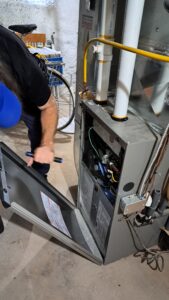
Reviewing the heating system as part of a full home inspection.
Why this matters for buyers and sellers
For buyers, knowing that your inspector carries Errors and Omissions insurance means you are working with someone who meets professional standards. It also means that if a legitimate issue arises after closing, there is a straightforward process in place to review what happened and address it appropriately.
For sellers, hiring an inspector with proper insurance reduces the chance of disputes later. When a buyer sees that the inspection was completed by a fully insured professional, it adds credibility and stability to the transaction.

Testing outlet polarity to confirm electrical safety.
In both cases, insurance helps create a smoother, more predictable experience, giving buyers and sellers peace of mind throughout the process.
How can you verify coverage early?
Asking your inspector directly or requesting a quick copy of the certificate ensures you work with a fully insured professional from the start.
A professional inspector should readily confirm their insurance. Requesting a quick copy of the certificate reassures buyers and sellers that the inspector is adequately insured.
What inspectors cannot see or guarantee
Even with experience and training, an inspector cannot see through insulation, drywall, flooring, or landscaping. Plumbing inside walls, wiring concealed in ceilings, and buried foundation surfaces all fall into this category.
My responsibility is to document everything visible and accessible at the time of the visit, explain what I see, and point out what may require further evaluation by a licensed specialist. Insurance supports that process by adding an extra layer of protection for situations outside of anyone’s control.
Why I maintain full insurance
I grew up in this region and have lived in Kingscourt, Bayridge, and rural South Frontenac. Homes here range from 19th-century farmhouses to wartime bungalows to brand-new builds. I have seen just about every variation of renovation and retrofitting, and I know how quickly a simple issue can be overlooked when something is hidden from view.
Maintaining Errors and Omissions insurance, along with General Liability coverage and ongoing training, is part of offering a responsible and professional inspection service. It means that clients have clarity and support long after the inspection day, and it keeps the process fair and predictable for everyone involved.
When to ask about insurance
You can ask about insurance at any point, but the best time is when you first contact the inspector. It sets the tone for the entire service. A qualified inspector will be transparent, clear, and comfortable explaining exactly what their insurance covers, the limits, and how it fits into a standard home inspection.
Final thoughts
A home inspection is one of the best tools you have when buying or selling a home. Insurance supports that process by providing reassurance and structure in the rare situations when something hidden later becomes visible. It is not about expecting problems. It is about making sure you have chosen someone who takes their work seriously and has the proper safeguards in place

Inspecting the sump pump system for proper operation.
If you have questions about inspection coverage, what is included, or how insurance works in older homes, rural homes, or renovations, I am always happy to explain the process before you book.
FAQ: Errors and Omissions Insurance in Home Inspections
Do all home inspectors carry Errors and Omissions insurance?
Not always. In Ontario, inspectors must meet specific standards, but coverage can vary between companies and individual inspectors. Asking about E&O and General Liability coverage is a simple way to confirm you are working with a fully insured professional.
Does E&O insurance mean an inspector is responsible for every issue in the home?
No. A home inspection is visual, not invasive. E&O covers situations where a problem could not be seen or was reasonably missed. It does not cover aging systems, hidden defects behind walls, or issues that appear after renovation work begins.
How does E&O protect me as a buyer?
It adds structure and clarity to the process. If a problem surfaces later that was not visible during the inspection, E&O provides a defined process for reviewing the situation. It supports the client and the inspector by focusing on fairness and facts.
Is General Liability insurance the same as Errors and Omissions insurance?
They are different.
General Liability covers accidental damage during the inspection itself.
E&O applies to reporting-related issues where a defect could not be seen or was reasonably overlooked.
A professional inspector carries both.
What if the home is older or has multiple past renovations?
Older homes, rural homes, and century properties often have layers of past work that limit visibility. E&O adds peace of mind when a hidden issue comes to light after the inspection. It does not replace specialist evaluation when something needs deeper investigation.
Can I see proof of insurance before booking?
Yes, and you should feel comfortable asking. A qualified inspector will provide an up-to-date certificate quickly and clearly explain the difference between the policies they maintain.