
Why Commercial and Residential Inspections Are Not the Same
When I complete a Commercial Building Assessment, the process is very different from a residential home inspection. A home inspection is designed to help a buyer understand whether a house is safe and suitable to live in. A commercial assessment is a form of due diligence. It assesses how well the building supports business operations, meets regulatory requirements, and performs over the long term. Understanding the building’s condition helps clients make confident, informed investment decisions, knowing what to expect and plan for.
How Residential Standards Compare to Commercial Building Standards
Residential inspections in Canada follow clear Standards of Practice from InterNACHI, ASHI, or provincial associations. These standards were created for houses and small multi-unit dwellings. The inspection is a visual review of the structure, roof, electrical panel, plumbing fixtures, HVAC system, and interior spaces.
For commercial buildings, I follow a more technical guideline commonly used across Canada. Many inspectors, including myself when appropriate, reference the ASTM E2018 framework for Property Condition Assessments. This approach examines how the building functions as an asset. Because commercial systems are more complex, I may recommend specialists to evaluate components beyond a general inspector’s scope of work. This thorough approach ensures all critical aspects are considered, giving clients peace of mind about the assessment’s comprehensiveness.
Differences in Scale and Building Systems
The systems in a commercial property are typically larger and more complex than anything found in a home. A residential building might have a single furnace and one electrical panel. A commercial building can have large rooftop HVAC units, multiple electrical distribution panels, three-phase service, industrial ventilation, commercial kitchens, reinforced concrete floors, or multi-storey circulation areas.

Interior view of the commercial garage and overhead door.
Warehouses may have loading docks, overhead doors, and traffic patterns designed for forklifts. Office buildings might include accessibility considerations, large mechanical rooms, and extensive flat roofs with complex drainage systems. Each property type brings its own operational expectations, and my assessment adapts to those needs.
Regulation, Safety, and Compliance
Commercial properties must meet a much broader set of regulations than residential homes, and expectations vary depending on the type of building and its intended use. In Ontario, this can include the Ontario Building Code, the Fire Code, AODA accessibility standards, and TSSA oversight for elevators, boilers, and fuel-burning appliances. Some properties may also fall under municipal zoning requirements, food-service regulations, or environmental rules related to ventilation, designated substances, or site contamination. During my assessment, I do not conduct a formal code-compliance inspection; instead, I look for visible signs that something may not meet current standards or best practices. Clients need to understand that my inspection does not replace specialized assessments, which are necessary for a complete understanding of complex issues requiring licensed professionals.
Environmental and Operational Considerations for a Commercial Building
Environmental factors often play a larger role in commercial buildings. Older properties may contain designated substances such as asbestos or lead. Some sites may have ventilation or air-quality issues that require specialist input. Drainage, moisture, airflow, and building use can all influence operational safety and long-term costs.
Operational suitability is also essential. When I assess a commercial property, I look at whether the building’s systems and layout can realistically support the intended business. The expected life span of the roof, HVAC capacity, electrical load, accessibility requirements, and fire-safety conditions all affect the building’s performance and value.

Exterior yard conditions at the commercial garage.
When an Environmental Site Assessment May Be Needed
An Environmental Site Assessment, or ESA, is a separate process typically completed by environmental consultants. I suggest an ESA when the property’s age, condition, or past use raises ecological questions. For example, signs such as abandoned tanks, floor staining, unusual odours, or documentation indicating former industrial activity may suggest that a deeper investigation is appropriate. Recognizing these scenarios helps clients prepare for potential environmental concerns.
While an ESA is not part of my general inspection, recommending one helps protect buyers from unexpected liabilities. Environmental issues can affect financing, insurance, redevelopment plans, and long-term safety. When concerns are visible or reasonably suspected, I advise clients to speak with a qualified environmental professional.
Commercial buildings sometimes require specialists beyond the general assessment
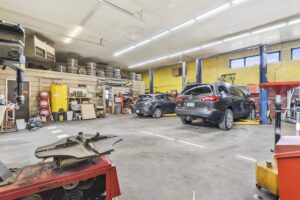
Interior of the auto shop with lifts and equipment.
I may recommend:
Elevator contractors, when an elevator or lift system needs evaluation
Fire-protection or sprinkler technicians when suppression systems, alarms, or commercial safety equipment require expert review
HVAC, electrical, or structural engineers when specific concerns call for deeper analysis
My goal is not to duplicate the work of these professionals, but to identify when their expertise is the appropriate next step.
Time, Cost, for the Commercial Building Report Process
Commercial assessments take longer than home inspections because the buildings are larger and the systems are more complex. A home inspection may take a few hours. A Commercial Building Assessment may require most of a day or more, depending on the building’s size and condition.
The final report is also written differently. A residential report explains safety concerns and maintenance issues in simple, accessible terms. In contrast, a commercial report is more technical, including system conditions, deficiencies, risk considerations, primary component life expectancy, and recommendations for further evaluation. This detailed information enables buyers, investors, and business owners to plan realistically for long-term operation, maintenance, and costs, supporting informed decision-making.
Why a Commercial Building Assessment Matters
A commercial property is a business investment. My assessment helps buyers understand the building’s condition, operational limitations, and upcoming capital needs. Whether the property will be used for retail, office, warehousing, or industrial purposes, the goal is the same. I want my clients to make informed decisions and avoid unexpected problems once the property is in use.
For business owners and investors in Kingston and the surrounding area, a Commercial Building Assessment provides a clear picture of performance, safety, and long-term viability.
Frequently Asked Questions
What makes a Commercial Building Assessment different from a home inspection?
A home inspection focuses on livability. My commercial assessments focus on whether the building can support business operations safely and efficiently. The systems are larger, the regulations are stricter, and the long-term financial impact is more significant.
Do commercial building assessments take longer?
Yes. Commercial buildings often include multiple HVAC units, industrial ventilation, complex electrical systems, and large flat roofs. Assessing these components takes more time than evaluating a typical home.
Is code compliance part of the assessment of a commercial building?
Not in a formal sense. I do not conduct code-compliance inspections, but I identify visible concerns and advise clients when further review by licensed professionals is necessary.
When is an ESA recommended?
I recommend an Environmental Site Assessment when signs of potential environmental concerns are present, such as industrial activity, unusual staining, abandoned equipment, or documentation of past ecological risk.
Why might I need specialists during the assessment process?
Commercial buildings sometimes require input from fire-safety contractors, sprinkler technicians, elevator mechanics, engineers, or environmental consultants. I recommend these specialists only when conditions justify it.