
Home inspections are a detailed assessment of how a property is performing on the day of the inspection. It is not a test, and it does not assign a grade. The purpose is to give you a clear understanding of the home, its strengths, its maintenance needs, and what to plan for in the years ahead. When everyone has the same set of facts, the conversation stays steady, and decisions become easier. A good inspection replaces guessing with clarity.
Homes in Kingston and the surrounding area vary widely, and understanding these regional differences is key to adequate inspections. Limestone foundations in the downtown core behave differently from poured concrete in newer subdivisions, affecting how we assess stability. Wartime builds in Kingscourt are unique, while 1970s and 1980s homes in Bayridge and Strathcona Park reflect their eras’ construction methods. Rural and lakeside properties around Sydenham, Harrowsmith, Verona, Battersea, and Glenburnie require special attention to wells, septic systems, or wood heat. Recognizing these regional factors helps ensure accurate evaluations.
This guide explains my approach to inspections and emphasizes how understanding the process can help you make informed decisions about your property in Kingston and Eastern Ontario.
Why home inspections matter in this region
Kingston and Eastern Ontario’s climate, with its long freeze-thaw cycles and humidity, significantly impacts foundation stability and exterior finishes, making regional climate a key consideration in inspections.
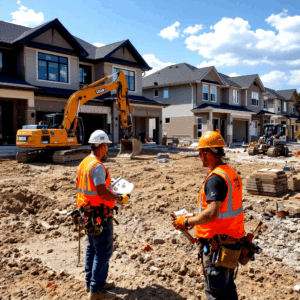
Inspectors on a new subdivision build.
A home inspection helps you understand how the house is performing today, taking into account regional climate factors such as soil movement and weather exposure that vary across Kingston and Eastern Ontario.
My background
I have lived in Kingston and the surrounding communities my entire life. I have owned homes in Kingscourt, Bayridge, and Sydenham, and I now live in a 100-year-old farmhouse in the countryside. Living in different types of homes has taught me how buildings age and how weather, materials, and renovations all interact over time.
Earlier in my life, I completed three years of plumbing training. That experience helps me recognize how supply lines, fixtures, fittings, and drainage systems behave as they age. It also helps me distinguish between normal wear and conditions that may require attention.
Over the years, I have worked with buyers and sellers represented by most of the local brokerages, including Century 21 Lanthorn, Royal LePage ProAlliance, Sutton, and the local RE/MAX offices. Every situation is a little different, but the goal is always the same. You should come away with clarity and confidence.
How I approach your home inspection
My approach is steady, practical, and grounded in experience. During the inspection, I explain what I am seeing and why it matters, so you understand the home clearly and realistically. The goal is not to create alarm or turn every mark or material into a problem. At the same time, I do not minimize concerns that deserve attention. If something needs to be monitored, repaired, or reviewed by a specialist, I will tell you plainly and explain the rationale. This helps you feel confident and supported in your decisions.
A good inspection should feel calm and thorough. I move through the home methodically, from the exterior to the interior, usually taking 2 to 4 hours, so the findings make sense in the correct order. You will hear what is functioning well, what is part of normal aging, and what may require planning. Most homes, regardless of age, have a mixture of all three. The purpose of the inspection is to give you a clear understanding of the home so you can make decisions with confidence, not pressure.
I encourage questions throughout the process and take the time to ensure the information is understandable. Whether you are buying, selling, or preparing for future maintenance, the approach remains the same: steady guidance, practical explanations, and a clear path forward. Asking questions helps you feel involved and confident in understanding your home.
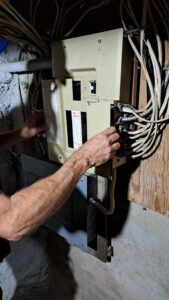
Inspecting an electrical panel.
Exterior
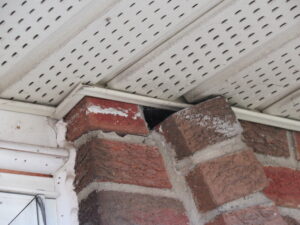
Gaps and missing flashing where brick meets the soffit can let water into the wall long before any stains show indoors.
I begin the inspection outside because the exterior often explains what is happening inside. Many moisture concerns, comfort issues, and long-term maintenance patterns originate with how water, heat, and weather interact with the outside of the home. Starting outdoors gives us the context needed to understand what we will later see in the basement, attic, and living areas.
Grading & Landscaping
I first look at how water moves across the property. Grading is checked to see if the ground slopes toward or away from the foundation. Even a slight slope can affect basement moisture, making this one of the most essential parts of the inspection. Downspouts are reviewed to see where they discharge and whether extensions are needed. Surface drainage paths, swales, and nearby hardscape features are also considered, especially on rural lots where natural water flow is part of the landscape.
Exterior Cladding
Siding, brick, stone, and exterior cladding come next. I check for gaps, deterioration, caulking failure, missing mortar, and any areas where water could penetrate. Windows and doors are examined for condition, installation quality, sealing, and water shedding. Trim, sills, flashings, and exterior finishes often show early signs of weathering, and spotting those patterns helps prevent future issues.
Decks and walkways
Decks, porches, steps, and railings are reviewed for stability, safety, and proper attachment. These areas often experience heavy wear due to sun exposure and foot traffic. I look for rot, loose fasteners, structural settlement, and railing conditions, especially on older properties.
Roof & Chimneys
From there, I assess the roof and roof lines. Roof surfaces are checked for shingle condition, flashing details, nail exposure, and areas prone to water entry, such as valleys, skylights, and chimneys. Chimney caps, brick, mortar, and counter flashing are examined when accessible. Vents and penetrations are reviewed for signs of aging or poor installation, since these small openings can greatly influence attic moisture and heat movement. Gutters and downspouts are evaluated for slope, attachment, and discharge efficiency. Where safe access is possible, I visually assess the roof from different angles to understand how well it is performing as a system.
The exterior tells the early part of the home’s story. It shows how the property manages water, how materials have aged in our climate, and what conditions may appear indoors. By the time we move inside, we already have a clear sense of how the home has been maintained and how exterior factors may influence the interior.
Interior
Inside the home, I start with the foundation and structure because these elements influence everything else. I look for signs of movement, settling, moisture patterns, and any evidence of past repairs. Small cracks, patched areas, and slight shifts are common in homes across Kingston and the surrounding communities. The goal is not to flag every mark on a wall, but to understand whether what we see is historic, normal aging, or something that may need closer attention.
Plumbing
Plumbing supply and drainage are examined throughout the home, including visible piping, fixtures, shut-offs, and water pressure. My plumbing background helps me explain how older copper, galvanized, PEX, and PVC systems age and what conditions are typical versus what may require planning or repairs. I run taps, check drainage flow, inspect accessible traps, and look for slow leaks or past water staining. Even small moisture patterns can tell a larger story about how the home has been maintained.
Electrical
Electrical components are reviewed next, beginning with the main panel. I look at the panel’s age, capacity, wiring type, grounding, and labelling. I also check outlets, switches, and visible wiring where they can be safely accessed. Many homes in the region have updates completed over several decades, so part of the review is understanding how the system has been modified and whether it continues to operate safely. If the room finishes conceal limitations or areas, this is explained in the report.

Electrical panel reviewed as part of a standard home inspection.
Heating & Cooling
Heating and cooling systems are assessed to understand how well they are operating and how air is being distributed throughout the home. Furnaces, boilers, heat pumps, and air conditioning units all have different maintenance cycles, and I look for signs of age, efficiency, and performance. In many homes, comfort issues relate more to airflow, duct layout, or zoning than to equipment failure. These patterns become clearer as we move through each room.
Ceilings & Walls
As we walk through living spaces, I pay attention to the condition of walls, ceilings, floors, windows, and interior finishes. Older homes often show a long history of renovations and seasonal movement. A slope in a floor, a patch in a ceiling, or a variation in trim height does not automatically indicate a problem. Instead, these features help us understand how the home was built, how it has shifted with time and climate, and what level of maintenance is reasonable for its age. I point out what is typical for the home’s era and what deserves monitoring.
Attic
During the home inspection, in the attic, when access is available, I examine the depth and consistency of the insulation and the ventilation pathways. Warm air meeting cold surfaces can create condensation, and attics often reveal these patterns long before they show in the living spaces below. I look for signs of heat loss, staining, rodent activity, and any areas where airflow may be restricted. In older homes, I identify insulation types, including vermiculite, and explain when laboratory testing or a specialized professional may be necessary before renovations or attic work. Attics are especially important in Eastern Ontario because our climate places heavy demands on insulation and ventilation.
After the inspection, I prepare a detailed digital report, complete with photographs and clear, plain-language explanations. The report outlines what is functioning well, what should be monitored, and what may require repairs or specialist input. It gives you a practical understanding of the home so you can plan confidently, whether you are buying, selling, or preparing for future maintenance.
How buyers use a home inspection
Buyers use the home inspection to understand the home’s actual condition and how it is likely to perform in the years ahead. A good inspection separates routine aging from developing concerns, helping you recognize which items require attention now and which are part of regular long-term maintenance. When you have this information in front of you, it can build confidence and reduce anxiety about unexpected issues, making your decision feel more secure.
Understanding how homes in Kingston and the surrounding area age differently, such as a 1950s Kingscourt home versus a 1980s Bayridge property, helps set realistic expectations based on typical regional characteristics.
From a negotiation standpoint, the inspection provides buyers with a factual basis for their decisions, enabling them to discuss repairs, adjustments, or credits with their REALTORS® with confidence.
How sellers benefit from a pre-listing home inspection
A pre-listing inspection provides sellers with the same clarity that buyers receive. When you understand the condition of the home before it goes on the market, you can decide which items to repair and which to disclose and price into the listing. This preparation allows you to address concerns at a reasonable pace rather than being rushed during negotiations. It also reduces the likelihood of last-minute delays that can unsettle a sale.
For sellers, the inspection becomes a practical planning tool. Small items can be handled easily, and larger projects can be prioritized or discussed with your REALTORS® before listing. Showing that you’ve taken this step can make you feel more in control and respected, as it demonstrates transparency and professionalism, which can foster trust with buyers.
A pre-listing inspection also helps set a professional tone for the transaction. It shows that you have taken the time to understand the property and can speak to its condition with accuracy. This preparation can make you feel more prepared and less overwhelmed, often leading to smoother negotiations and fewer surprises once an offer is accepted, streamlining the sale process.
Common issues in Kingston area homes
Homes in Eastern Ontario share recurring patterns that reflect age, climate, and construction style. Basement dampness is common and often improves with simple changes to grading or downspout placement. Attic ventilation can be limited in older roof assemblies, especially where additional insulation has been added over time. Proper airflow prevents heat and moisture from collecting.
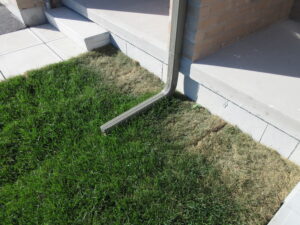
Downspouts that drain beside the wall rather than several feet away can keep the soil at the foundation wet, leading to basement moisture problems.
Flashing around chimneys and roof valleys is often worn. These areas handle large volumes of water and require regular maintenance. Foundation movement is common in century and wartime homes and is usually historic and stable rather than a structural concern. Plumbing materials vary widely. Cast iron and clay waste lines may be nearing the end of their lifespan, while copper supply lines often continue to perform well. Some homes built or renovated between the mid-1990s and early 2000s contain Kitec or similar PEX-AL-PEX lines that require planning. Electrical systems may also benefit from updating, depending on age and capacity.
These conditions are not reasons to avoid a home. They are simply factors to understand so you can plan responsibly.
What the report does and does not cover
Does cover
A home inspection is visual and non-invasive; this means the inspection focuses on what can be seen and safely accessed on the day of the visit. I do not open walls, remove finishes, dismantle equipment, or perform any work that could damage the home. Instead, I look for clear indicators of how systems are performing, how materials are aging, and whether anything suggests the need for closer review.
The inspection covers the major components of the home, including the exterior, roof surfaces when safely visible, structure, foundation, plumbing supply and drainage, electrical distribution, heating and cooling systems, insulation and ventilation in accessible attics, doors and windows, and the general condition of interior finishes. Each section is examined for signs of wear, installation quality, moisture patterns, and maintenance needs. The goal is to give you a practical understanding of how the home is functioning today.
Does not cover
Some areas fall outside the scope of a standard home inspection. A typical inspection does not include septic system evaluation, well water testing, WETT certification for wood burning appliances, complete radon diagnostics beyond a preliminary screen, mould or air quality testing, pool or spa system inspection, or a code compliance review. These services require specialized equipment, licensing, or invasive testing that goes beyond what a home inspector can or should perform during a general inspection.
If something seen during the inspection suggests that one of these specialized reviews would be helpful, I will explain why and point you to the appropriate professional. These professionals may include a licensed plumber, electrician, HVAC technician, roofer, basement or foundation specialist, well and septic contractor, radon measurement professional, or wood-burning appliance technician. The goal is not to send you down a long list of referrals, but to help you focus only on the areas that genuinely warrant further investigation.
A home inspection is meant to give you clarity without unnecessary alarm. By understanding what the inspection covers and what it does not, you can make practical decisions about next steps and involve the right specialists when needed.
.

Testing outlet polarity to confirm electrical safety.
After the inspection
Most clients take time to review the inspection report and then follow up with questions once they have had a chance to absorb the information. This is normal. A report contains a lot of detail, and it often helps to revisit a few items once you have read through everything at your own pace. I am available to talk through the findings, explain what matters now, and point out which items can be planned for over time. The goal is steady, practical next steps, not pressure.
After the inspection, buyers usually want to understand three things clearly.
The first is whether anything found should influence the price or the conditions of the offer. The second is what repairs are needed immediately versus what can wait until later. The third is how to organize future maintenance so ownership feels manageable. A good inspection should give you enough information to make those decisions calmly. If you choose to request repairs or a price adjustment, the report provides clear documentation to support that conversation with your REALTOR.
Sellers use the report differently.
A seller’s primary focus is understanding what to address before listing and what to disclose so the process stays smooth once the home is on the market. Some items can be repaired quickly and inexpensively, while others are noted and priced into the listing. A pre-listing inspection reduces surprises and supports a more predictable transaction. Sellers often tell me that having a clear, organized report makes it easier to decide where to invest time before listing and where to provide information to buyers.
Follow-up visits when repairs are completed
If repairs are completed before closing, a shorter follow-up visit can confirm that the work has been done correctly and safely. This is useful for plumbing updates, electrical corrections, exterior drainage adjustments, or moisture-related repairs. A follow-up visit is not another full inspection. It is a focused review of specific items to ensure everyone has confidence that the agreed-upon work is complete.
Clear communication from start to finish
The home inspection process does not end when the report is delivered. Most people only go through a home purchase or sale a few times in their lives. Having a steady point of contact makes a difference. Whether you are a buyer planning long-term maintenance or a seller preparing to list your home, the aim is to keep the process clear, calm, and grounded in practical advice.
Why local experience matters
Homes in this part of Ontario have their own patterns. The combination of lake humidity, local soil types, seasonal temperature swings, and decades of renovation methods means that context matters when evaluating a home. Having lived in Kingscourt, Bayridge, Sydenham, and the rural countryside, I have seen how homes built in different eras respond to these conditions. This background helps me distinguish normal aging from emerging problems and enables you to understand the home in the context of our region.
FAQ
Can a house fail a home inspection?
No. A home inspection does not have a pass-or-fail outcome. The inspection describes the condition of the home on the day of the visit so you understand how the major systems are performing, what is aging normally, and what may need repair or monitoring. Every home has a mixture of strengths and routine maintenance items. The goal is to give you clear information, not a score so that you can make informed decisions with calm and confidence.
Should buyers attend their home inspection?
If you can, yes. Attending home inspections as a buyer gives you the most precise understanding of how the home works. Walking through the systems in person helps you see how the plumbing, electrical, heating, and ventilation systems operate, where the key shut-offs and safety controls are located, and what ongoing maintenance will look like once you take ownership. Buyers usually find that being present during home inspections makes the information easier to remember because they can match what they see on site with what appears in the report. It also gives you the chance to ask practical questions that help you manage the home confidently in the years ahead.
Should sellers attend their home inspections?
Yes, if it fits your schedule. For sellers, attending home inspections lets you see how the inspector assesses the home’s condition and significant systems. Watching the process firsthand helps you understand which items are regular maintenance and which may be worth addressing before listing or negotiation. Many sellers find that being present during home inspections gives them insight into what buyers will notice and how to practically prepare the home. It also helps prevent surprises later in the transaction, which is especially valuable in older or rural properties.
What happens if a significant issue is found?
Significant issues may be found during your home inspection, but that doesn’t necessarily mean the purchase will end. They tell you that you have more information to work with. You can request repairs, ask for a price adjustment, or discuss options with your REALTOR if you are within your conditional window. The goal is not to alarm, but to provide clarity.
Do older homes always have more problems?
Not necessarily. Older homes reflect the materials and construction methods of their era. Many have stood for 80 to 120 years. The key is understanding which parts of the home’s normal aging are and which may need attention. Context matters more than age alone.
Will the inspection find everything?
Home inspections are visual and non-invasive, so they focus on what can be seen and what is safely accessible. If something suggests further testing, such as a structural review, well or septic evaluation, or professional radon testing, I will explain why and recommend the appropriate type of specialist.
How long does the inspection take?
Most inspections take between two and four hours, depending on size, age, and accessibility. The written report is usually delivered within one business day.
Is the report easy to understand
es. The report is designed to be easy to read, even if you have never seen a home inspection report before. Each section is written in clear, plain language and supported by photographs taken during the inspection. Every photo is labelled so you know exactly what part of the home you are looking at and why it was included.
The report is organized practically so you can understand the home without feeling overwhelmed. It begins with a summary highlighting the key items to pay attention to, followed by detailed sections on the exterior, structure, roof, plumbing, electrical, heating and cooling systems, interior finishes, and the attic. Within each section, items are grouped into three categories: those functioning as expected, those that should be monitored over time, and those that may require repair or specialist attention.
For each item covered in the home inspection, you will see a short explanation of the condition, what it means for the home, and the reasonable next steps. The goal is not to alarm you but to help you understand the home and plan accordingly. Most clients tell me that the combination of photos, clear descriptions, and practical recommendations makes the report straightforward to follow and easy to return to later as a reference.
Does the weather affect the inspection?
Only in some instances. Heavy snow, ice, or unsafe roof conditions may prevent roof inspection from above, but the attic and interior can still provide clues about roof performance. Rain helps identify drainage issues. If anything is limited by weather, it will be noted in the report.
Don’t miss these guides:
Seeing the Unseen